


Transform the Vibe of Your Home With Surf Art

Updated: Nov 4
A room can have beautiful furniture, plenty of natural light and all the practical pieces in place, yet still feel like it could belong to anyone. To transform the vibe of your home, start with the things that tell your story. For ocean people, that might be the break where you learned to surf, a summer spent on the Gold Coast, or the view from a favourite coastal road trip.
Surf-inspired art does more than fill a blank wall. It brings in a sense of salt air, open horizons and the easy rhythm of a day shaped by tides rather than timetables. The goal is not to turn every room into a beach shack. It is to create a home that feels considered, personal and a little closer to the coast.
Transform the vibe of your home with a sense of place
Generic beach décor can look pleasant, but it rarely carries much feeling. A print inspired by a recognisable surf break or coastal destination has a different pull. It gives guests something to notice and gives you a small reminder of a place that matters.
Choose artwork with a real connection to your life. It could be a print of a local stretch of coast, a spot from a memorable surf trip, or the town where your family spends each Christmas. A framed artwork of Rottnest, the Sunshine Coast, Northern New South Wales or Bali can hold its own as a design piece while bringing back the details that maps and photos often miss: the anticipation of checking the swell, sandy feet in the car, the first coffee after an early paddle.
This is especially effective in entryways, living rooms and dining areas, where art sets the mood before anyone has taken a seat. In a holiday home, location-based pieces can help the space feel rooted in its surroundings rather than furnished as an afterthought.
Let one print lead the room
If you are unsure where to begin, choose one artwork you genuinely love and build outward from there. Look at its palette first. A sun-faded print might pair naturally with warm whites, timber, woven texture and sandy neutrals. A bolder coastal graphic can work beautifully against crisp white walls, charcoal accents or deep ocean blue.
You do not need to match every cushion to the artwork. In fact, too much matching can make a space feel staged. Pick up one or two colours from the print in smaller details, such as a ceramic vase, a throw, a book spine or a pot plant. Leave enough quiet space around the artwork for it to breathe.
Choose scale before you choose more décor
One of the quickest ways to change a room is also one of the most overlooked: get the scale right. A tiny print above a wide sofa can feel lost, no matter how good the artwork is. A larger framed piece creates an immediate focal point and gives the room more confidence.
As a guide, artwork above a sofa, bed or sideboard should usually span around half to two-thirds of the furniture width. It does not have to be exact, but it helps avoid that floating, disconnected look. Hang the centre of a single piece roughly at eye level, then adjust for the room and the furniture below it.
A large statement print suits open-plan living spaces and simple walls. Smaller pieces are ideal for tighter spots, including hallways, reading corners and home offices. A pair of related prints can also bring balance over bedside tables or along a long wall without feeling too formal.
Frames matter here. Natural timber feels warm and relaxed, while black frames can sharpen a graphic print and give it a more contemporary edge. White frames tend to blend into pale walls and suit an airy, minimal coastal look. The best choice depends on the room, but consistency helps when you are displaying several works nearby.
Create a coastal palette without going overboard
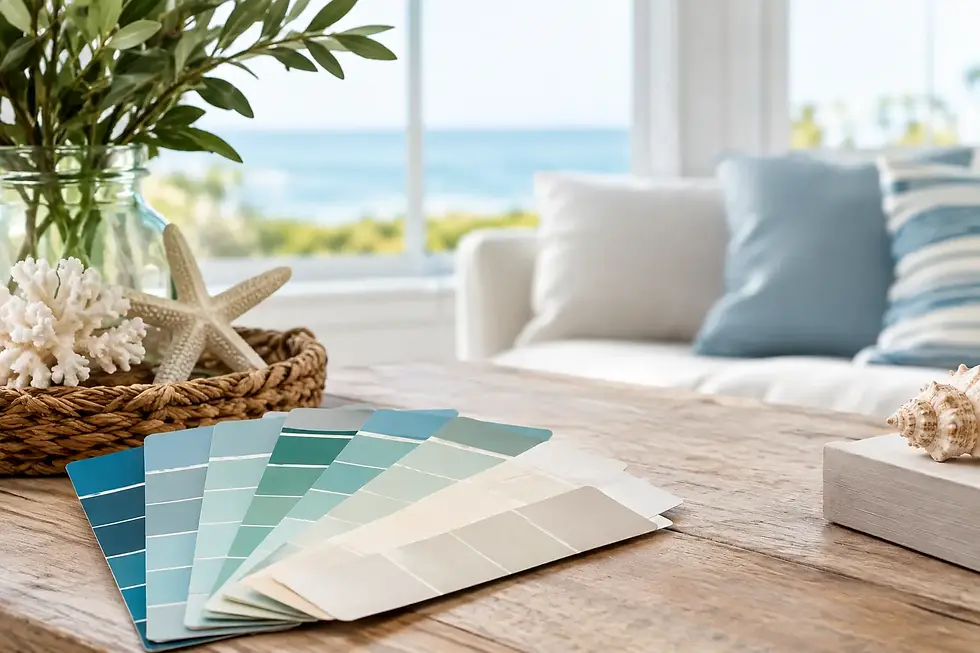
Coastal interiors do not need to rely on seashells, anchors and turquoise everything. The strongest versions feel calm because they borrow from the coast more subtly: weathered timber, chalky whites, sea-glass greens, sun-warmed clay, navy and the soft grey of an overcast beach morning.
Start with a neutral base if you can. White, cream, oatmeal, pale grey and soft stone colours make surf art pop without competing for attention. Then add colour with intention. A faded coral or dusty blue can shift the mood of a room without asking for a full repaint.
Texture is what keeps a pared-back space from feeling flat. Mix linen cushions, cotton throws, rattan, timber, ceramic and a few living plants. These materials feel relaxed and tactile, but they are still polished enough for a modern home or apartment.
There is a trade-off, though. If a room already has patterned rugs, colourful furniture and lots of objects on display, choose cleaner, simpler artwork. If your furniture is restrained and the walls are bare, a detailed or colourful print can carry more visual energy.
Give blank walls a job to do
Every wall does not need art, but the right wall can change how a room works. A print near the front door creates a welcoming first impression. Art in a home office can replace the sterile feeling of a blank wall with a view that feels more like a quick escape between meetings. In a bedroom, a softer coastal piece can make the room feel slower and more restful.
Think beyond the obvious places, too. A narrow hallway can become a personal gallery of places you have surfed or travelled. A stairwell works well for a collection that grows over time. A laundry or guest room can take a smaller print that gives the space a bit of character without demanding much styling around it.
For rentals, framed prints are particularly useful because they deliver a strong visual change without a renovation. Use damage-free hanging options where needed, or lean larger framed work on a sideboard or shelf. The latter feels casual and allows you to move things around as your space evolves.
Build a gallery wall with a loose plan
A gallery wall should feel collected, not chaotic. Start by laying the frames on the floor and finding the arrangement before touching the wall. Keep the gaps between pieces consistent, usually around five to eight centimetres, so the grouping reads as one composition.
There are two reliable directions. You can keep frames the same colour and vary the print sizes for a clean, editorial look. Or you can mix frame finishes and artwork sizes more freely, provided there is a common thread such as coastal locations, surf culture or a shared colour family.
Avoid filling every available centimetre. A gallery wall needs some negative space to feel intentional. Three strong prints can often say more than nine small pieces chosen just to complete the shape.
Make the room feel lived in, not themed
The most inviting coastal homes are not showrooms. They have signs of the people who use them: a stack of well-read surf magazines, a board resting in a corner, a favourite photograph, a towel draped after a morning swim. These details give art context and make the space feel believable.
That does not mean clutter is the answer. Edit the objects around your artwork so the eye has somewhere to rest. A surf print above a console may only need a lamp, a small vessel and one personal item below it. Let the print hold the story.
Surf car art can bring a different kind of energy to a garage studio, rumpus room or office. It nods to road trips, board racks and the long way home after a good session. Used sparingly, it adds personality without turning the room into a novelty theme.
Bring your own coastline indoors
The best home décor does not chase a trend. It reflects the places, colours and rituals that make you feel most like yourself. Whether you prefer clean modern lines, a relaxed holiday-house feel or a home full of collected memories, artwork can be the piece that ties it together.
Surf Prints Australia creates original work around iconic breaks and coastal destinations, making it easier to choose art with more than just a pretty view behind it. Pick the place that still stays with you, give it room on the wall, and let that familiar coastal feeling shape the rest of the space.


Comments