


Beautifully framed surf art enhances your space
- Tony Leishman
- Aug 16
- 6 min read

Updated: 4 days ago

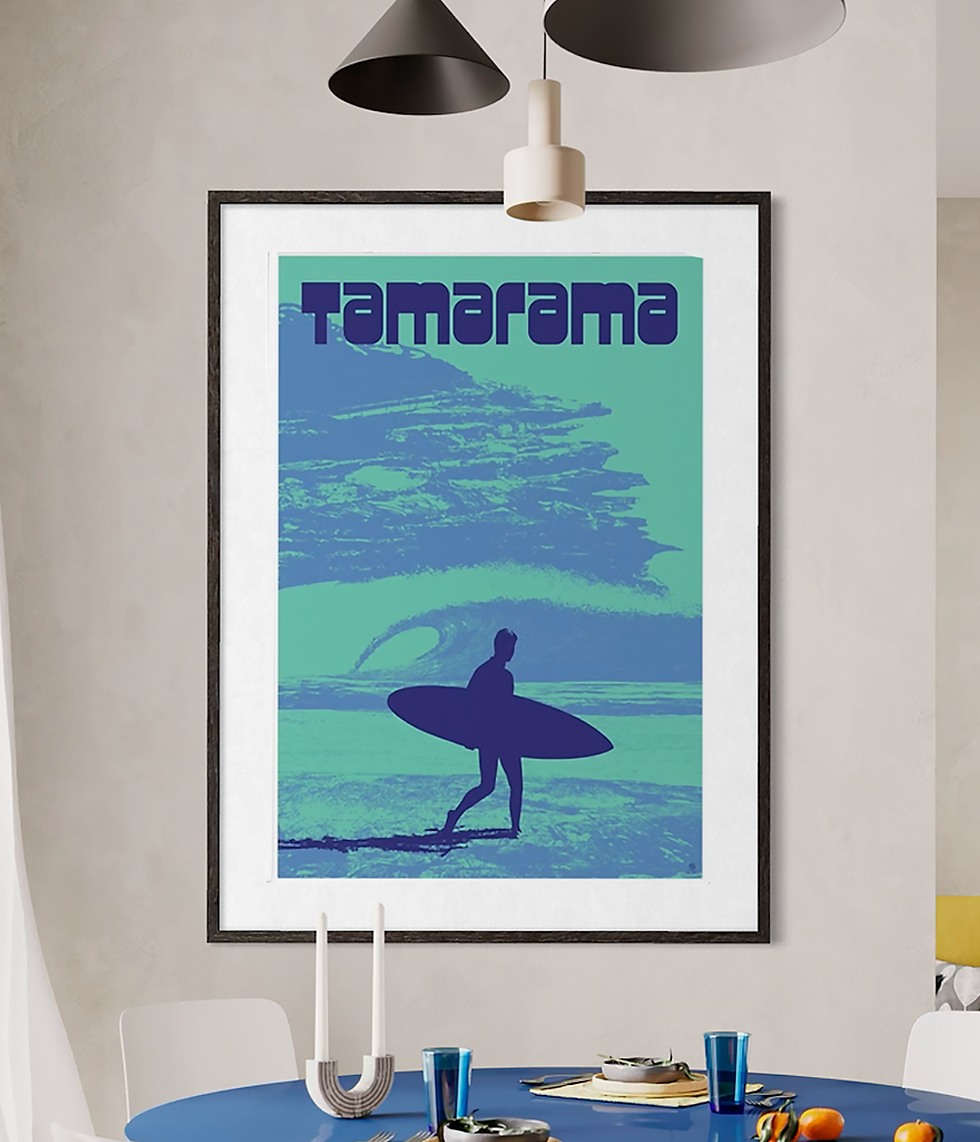
A framed print of a break you know by heart should not end up floating too high above the sofa or squeezed into the only spare patch of wall. Whether it is the stretch of coastline where you learnt to surf, a favourite holiday escape or a sun-faded classic car scene, the way you hang it changes how it feels in the room. Knowing how to display framed prints is less about following rigid decorating rules and more about giving the artwork enough space, balance and light to bring that coastal feeling home.
Start with the feeling you want the room to hold
Before measuring hooks or reaching for the spirit level, stand in the room and consider its mood. A single large print can create a calm focal point above a bed, sideboard or sofa. A collection of smaller prints can feel more like a wall of memories - different beaches, road trips and days spent checking the swell.
For a pared-back living room, one hero print often has the strongest impact. Choose a location or scene with a colour palette that works with the room, then let it breathe. A print with sea blues, sandy neutrals and soft sun tones sits naturally alongside timber, linen, rattan and white walls without making the space feel overly themed.
If your home already has layers of personality, a gallery arrangement can work beautifully. Mix locations that mean something to you: the local break, a favourite coastal town, somewhere from a memorable trip. The result should feel collected, not like a catalogue page. That personal connection is what makes surf-inspired wall art more than just beach décor.
How to display framed prints at the right height
The most common hanging mistake is putting artwork too high. Prints are meant to be part of the room, not a tiny feature near the ceiling. As a reliable starting point, position the centre of the artwork around 145 to 150 centimetres from the floor. This is close to average eye level and generally feels right in hallways, dining spaces and rooms where people stand.
Above furniture, use the furniture as your guide. Leave roughly 15 to 25 centimetres between the top of a sofa, bedhead, console or sideboard and the bottom of the frame. The art will feel visually connected to the piece below it rather than stranded above it.
Scale matters just as much as height. Over a sofa, aim for artwork or a grouped arrangement that is about two-thirds to three-quarters of the sofa's width. A small framed print can still look great there, but give it company with a lamp, books, a trailing plant or a second print so it belongs to a considered arrangement.
There are exceptions. In a room with high ceilings, you may want to hang a little higher to suit the proportions. In a beach house with relaxed low furniture, keep the print lower and closer to the living zone. Use the measurements as a starting point, then trust what looks balanced from the spot where you actually sit.
Choose one print or build a gallery wall
A single framed print works best when the image has a strong sense of place. An iconic wave, headland or beach access track can hold a wall on its own, especially in a bedroom, entryway or smaller room. Keep the surrounding styling simple. The quieter the wall, the more the artwork can carry that window-to-the-coast feeling.
Gallery walls suit bigger blank walls, stairwells, long hallways and holiday homes where every frame can tell a slightly different story. The trick is to create a clear system before you begin. You might keep every frame the same colour and size for a clean, contemporary look. Or combine a few sizes in the same timber or black frame for something more relaxed and collected.
A consistent gap is what makes a gallery wall feel intentional. Keep about five to eight centimetres between frames, adjusting slightly for very small or very large pieces. Lay the prints on the floor first, or cut paper templates to the size of each frame and tape them to the wall. It is a simple step that saves filling unnecessary holes later.
For a set of location-based prints, try arranging them by colour, coastline or memory. A Gold Coast piece beside Northern New South Wales and Byron-inspired scenes can create a natural coastal run. A Bali print mixed with Australian breaks brings in the feeling of a well-travelled quiver. There is no need to make every image match perfectly. A shared frame style and thoughtful spacing are usually enough to pull the look together.
Let the frame work with your interior
The frame is part of the art's presence. Black frames bring definition and are a sharp choice for modern homes, darker accents and graphic surf imagery. Natural timber frames soften the look and suit spaces with pale floors, woven textures and sun-washed coastal colours. White frames can almost disappear against a white wall, making the image feel light and airy.
If you are unsure, look at the finishes already in the room. Match a black frame to window trims, a timber frame to furniture, or choose white when you want the art rather than the border to do the talking. You do not need every frame in the house to match, but repeating one or two finishes creates visual rhythm as you move between rooms.
Mat boards also affect the final feel. A generous white border gives an image room to breathe and can make a smaller print feel more substantial. Edge-to-edge framing feels bolder and more immersive, particularly with bright, graphic artwork. Neither is automatically better. It depends on the image, the room and whether you want a clean gallery effect or a more casual holiday-home mood.
Use light without letting it fade the artwork
Natural light makes coastal art sing, but direct sun can be tough on prints over time. Avoid placing framed prints where afternoon sunlight hits them hard every day, especially beside uncovered west-facing windows. If that is the only wall that works, consider sheer curtains, blinds or UV-protective glazing.
At night, a nearby floor lamp, table lamp or adjustable picture light can make the artwork feel warmer and more deliberate. Keep lighting soft rather than overly bright. The goal is to catch the colour and texture of the print, not create glare on the glass.
Bathrooms, laundries and damp coastal properties need extra thought. Humidity and salt air can affect paper, frames and backing over time. Choose well-sealed framing, avoid hanging directly beside a steamy shower, and leave a little breathing room around the frame. In a holiday house that sits closed up for weeks, good ventilation matters as much as where the print hangs.
Make the placement personal, not precious
The entryway is a brilliant place for a print that sets the tone as soon as you walk in. Choose somewhere that feels like a welcome home after a beach run or a weekend away. In the living room, place the art where it can be seen from the main seat, not only when someone stands at the doorway.
Bedrooms suit quieter coastal scenes and locations with a personal story. A print above the bed can be a beautiful centrepiece, although it needs secure fixings and a sensible weight for safety. Home offices are ideal for a view that gives your eye somewhere to travel between calls, emails and long afternoons indoors.
Do not save your favourite piece for a room that is rarely used. Art earns its place when you see it often. If a framed print makes you think of first light, a favourite point break or the drive down to the coast, hang it where it can do that every day.
Hang it securely and give it time
Use the right wall fixings for the frame weight and wall type. Plasterboard often needs rated anchors rather than a basic nail, while masonry needs suitable plugs and screws. For heavier framed pieces, use two hooks or fixings to keep the frame level and reduce movement. Check the hanging hardware on the back before marking the wall, because the hook point is usually higher than the top of the frame's wire.
Once it is hung, live with it for a few days. Notice it in morning light, from the sofa and when you walk past with an armful of towels after the beach. The best display is not the one that follows every decorating rule. It is the one that makes your space feel more like your own patch of coast, even when the ocean is a fair way down the road.


Comments