


A Guide to Beach House Styling That Feels Real
- Tony Leishman
- 2 days ago
- 5 min read

A beach house should feel like somewhere you can arrive with sandy feet, drop the towels by the door and settle in before the kettle boils. The best guide to beach house styling starts there: not with a themed room full of anchors and shells, but with the easy, sun-worn feeling of a place shaped by the coast.
Whether you are styling a permanent home in Noosa, a weekender down the Victorian coast or a beachy inner-city space that needs more salt-air energy, the aim is the same. Create rooms that feel relaxed and personal, while still working hard for real life.
Start with the coast you know
Beach house style is strongest when it belongs somewhere. Rather than copying a generic holiday rental look, take cues from the landscape, light and memories that make your favourite stretch of coast feel like yours.
A home inspired by the Gold Coast might lean into clean white walls, bright light, palms and colour pulled from a clear morning lineup. A weatherboard shack near Byron Bay may call for warmer timbers, faded terracotta, handmade ceramics and linen that looks better slightly rumpled. Down south, where the sea is moodier and the wind has a bit more bite, deeper blues, charcoal, olive and wool can feel more honest than crisp tropical white.
This is not about matching every cushion to the ocean. It is about finding a palette with a local pulse. Look outside at the sand, scrub, rock shelves, water and sky, then bring in a few of those tones at different depths. Soft white and oat make a calm base. Sea blue, eucalyptus green, sun-faded coral or mustard can add the lift.
Build the room from natural texture
Coastal interiors need texture because they are often deliberately simple in colour. If every surface is smooth, bright and new, the room can tip from relaxed to display-home polished. Timber, linen, cotton, rattan, jute, clay and woven fibres give a beach house the depth that paint alone cannot.
Choose materials that improve with use. A solid timber dining table can handle long lunches and wet swimmers better than a delicate statement piece. Washable linen slipcovers are practical in homes with kids, dogs or regular visitors. Woven baskets make easy storage for extra throws, beach towels and the collection of hats that always seems to grow near the coast.
There is a trade-off here. Pale jute and loose-weave rugs look great, but they can be frustrating in high-traffic zones where sand is a daily guest. In an entry or living room, consider a flatweave rug in a flecked neutral that disguises the reality of coastal living. Save the more delicate textures for a bedroom or quieter reading corner.
Let timber look like timber
Avoid trying to make every piece of wood match. The charm is in the mix: a honey-toned vintage sideboard beside a pale oak coffee table, or a painted bench paired with timber dining chairs. What matters is that the overall mood stays warm and unforced.
If you are working with a small beach house, use timber selectively. A timber shelf, framed art and one substantial furniture piece will often create more impact than filling every corner with coastal décor.
Keep the foundation light, not empty
White walls are a coastal classic for good reason. They bounce light around and make a room feel breezy, particularly when the windows are open and the afternoon sun shifts across the floor. But pure, stark white can feel cold in south-facing rooms or homes with limited natural light.
Try warm white, soft chalk, sandy beige or the palest grey instead. These shades give artwork and furniture room to breathe without turning the home into a blank box. Add contrast through black or dark bronze hardware, a striped cushion, a painted lamp base or a deep blue occasional chair.
A beach house also needs visual rests. Not every wall needs art, and not every shelf needs styling. Leave some clear space around windows, doorways and your favourite pieces. That breathing room lets the home feel open rather than over-decorated.
Make art the place where the story lives
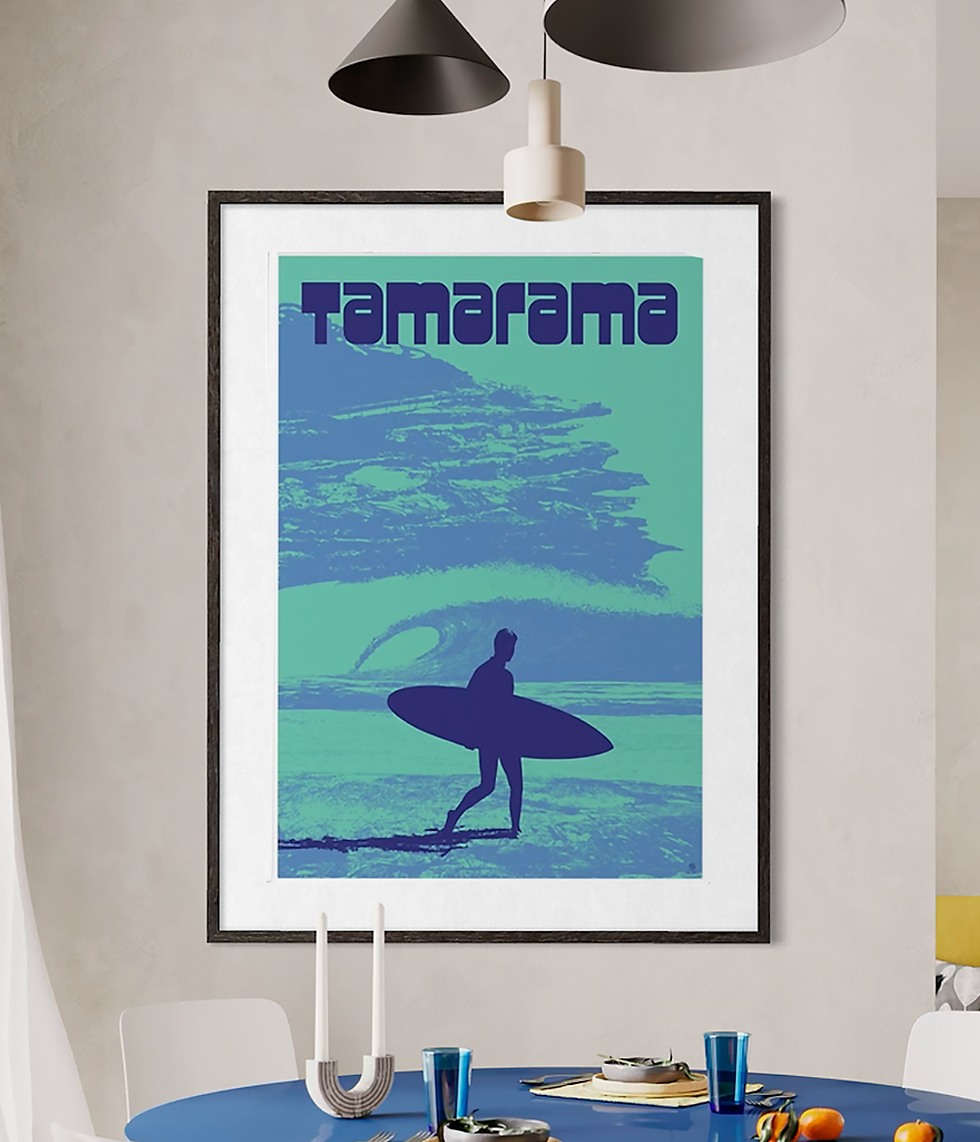
The difference between beach-inspired décor and a home that truly feels coastal is often the story on the walls. Generic prints can fill a gap, but place-based art gives the room a sense of belonging. A familiar headland, a local point break, an old surf car or the beach where your family spends every summer can immediately make the space feel yours.
Choose art with colours that complement the room, but do not be afraid of a print that brings a stronger hit of blue, green or sunset orange. It can become the point that draws everything else together. In a quiet living room, a larger framed work above the sofa or sideboard creates a clear focal point. In a hallway, a run of smaller prints can feel like a visual road trip along the coast.
Think about the feeling as much as the view. A clean graphic print of a well-known surf break suits a more modern room. An artwork with weathered tones and nostalgic detail may be right at home with vintage furniture and layered textiles. Surf Prints Australia pieces are designed around recognisable coastal places, which makes them particularly good for homes that want a real connection to a favourite break rather than a generic beach scene.
Hang art at a comfortable viewing height, generally with the centre around eye level. Above furniture, leave enough space for the piece to feel connected to what sits below it, rather than floating too high on the wall. If you are unsure, cut paper to the frame size and tape it up first. It is a simple trick that saves plenty of second-guessing.
Style for bare feet and real weekends
A beautiful beach house still has to cope with sunscreen, salt, board bags and extra people around the table. Practicality is not the opposite of style here. It is what makes the relaxed look believable.
Set up a proper landing spot near the entrance: hooks for towels and bags, a bench for pulling off thongs, and a basket for sunscreen or dog leads. Use lamps as well as overhead lighting so evenings feel warm after the sun drops. In bedrooms, keep bedside tables simple and make the bed inviting with a cotton quilt, linen pillowcases and one extra layer for cooler nights.
For a holiday home, resist filling every shelf with fragile objects. A few pieces with shape and meaning will do more than a crowd of tiny souvenirs. A hand-thrown vase, a stack of well-thumbed surf magazines, a found timber object and framed coastal art create character without making guests nervous about touching anything.
A guide to beach house styling without the clichés
The coastal look can lose its way when every detail announces itself. Fish-shaped ornaments, nautical signs and endless blue-and-white stripes can quickly make a home feel more like a café fit-out than a place with a genuine connection to the sea.
Instead, choose references with restraint. One striped throw may be enough. A vintage surfboard can work beautifully as a sculptural object if it has room around it. Shells collected on a meaningful trip are better displayed in a small bowl than scattered across every surface.
The same goes for colour. Blue is welcome, but it does not need to lead every room. Coastal homes can be sandy, green, rust-coloured, sun-bleached pink or nearly monochrome. The ocean mood comes through in the lightness, texture and connection to place, not a strict decorating formula.
Let it evolve with the seasons
The most memorable beach homes do not look finished in one weekend. They collect stories slowly: a print from a beloved coast, a chair found at a local market, a ceramic picked up on a road trip, photos from a family summer that become more meaningful each year.
Start with the light, the materials and one artwork that takes you straight back to the water. Then leave enough space for the next good find. A beach house feels most like home when it carries the marks of the coast and the people who keep returning to it.


Comments